Optimize photon density and spectrum for the most critical stage of the cultivation cycle. We build lighting environments that drive yield, not just fixtures.
| Canopy Size | Power Options | Recommended Models | Under-Canopy (Optional) |
|---|---|---|---|
| 4 × 4 ft | 600W–1000W | 4×4 wide bar 1000W fixture, PPE 3.0 µmol/J | 2 × 120W bars between rows |
| 4 × 6 ft | 1000W–1400W | Golden dual-channel 1300W, PPE 3.3 µmol/J | 3 × 120W–150W bars |
| 4 × 8 ft | 1200W–1600W | 4×8 ft 1500W, powerful and large footprint | 4 × 150W or 2 × 300W bars |
| LED Modules | 800W / 1200W | 800W, 1:1 replacement of HPS | — |
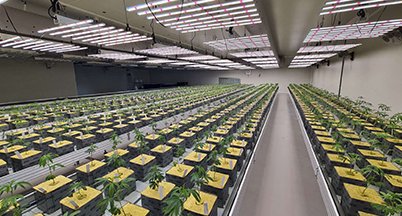
| Full room (per 1,000 sq ft) | 32–43 kW installed | Mixed 4×6 / 4×8 by ceiling height | Sized to trellis layout |
These are starting points, not quotes. Final counts depend on ceiling height, canopy shape, aisle width, dimming strategy and your target PPFD. We confirm the final count with your quote.
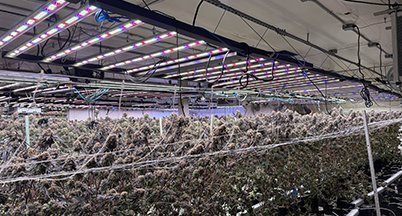
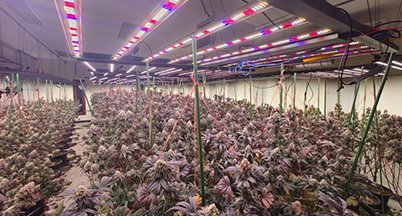
Even coverage beats a higher number in the middle of the room. We size fixture spacing to the room, not to a symmetric grid.
Low ceilings push you toward wider bars and more fixtures at lower power: a different bill of materials than a tall room.
LED cuts radiant heat versus HPS, but total watts still drive cooling load. We give you the kW figure your HVAC contractor needs.
0–10V / PWM dimming lets you run lower intensity in early flower or propagation without buying a second fixture set.
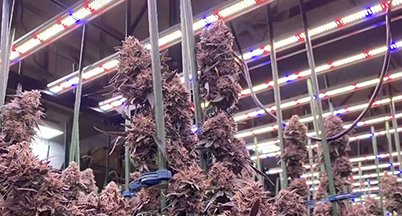
Where trellis geometry allows, 120W–300W bars under the canopy target lower bud sites that overhead light never reaches.
Certification path (ETL / DLC / CE / RoHS) chosen per destination market before production, so nothing is designed twice.
Send your room dimensions and ceiling height, and we return a fixture count with stated assumptions before you commit.
As a planning range, a 1,000 sq ft flower room takes 32–43 kW of installed top-light power across 4×6 or 4×8 fixtures. The spread comes from canopy density, ceiling height and target PPFD. Send your dimensions and we return a recommended fixture count and a quote.
In dense canopies with trellised rows, yes. Controlled trials that added under-canopy light to an adequate top-light setup report +24.58% dry flower yield and +24.4% total THC, with intercanopy bud sites gaining up to 29.95%. The largest gains appear where the lower canopy is most shaded. Results vary by cultivar, canopy density and room.
Most commercial flower rooms target 900–1,500 µmol/m²/s at the canopy, with the exact target set by cultivar and cost per gram. We plan dimming so you can run lower intensity in early flower and push toward the top of the range at peak flower, and the layout states the target PPFD per zone.
Often yes, and it is the reason we build the LED Module Series. The 800W and 1200W modules are drop-in replacements for HPS: AC 100–277V / 347–480V input, same pole spacing, same circuit, so the room does not need rewiring. As LED fixtures they cut power draw for the same photon output, and 0–10V dimming lets you hold intensity back in early flower, which HPS cannot do. Send your current fixture count and breaker capacity and we will confirm the match before you commit.
Yes. We supply controllers alongside the fixtures, so one system covers the whole room: zone-level dimming for brightness, sunrise and sunset ramping that fades the lights up and down instead of switching them on at full power, and sensor inputs for temperature and humidity monitoring. Fixtures are 0–10V / PWM dimmable, so they also work with most third-party controllers if you prefer to keep the system you already run.
Yes, and it is common practice. Ceiling height and bench geometry decide which footprint fits where, and both models share the same 0–10V dimming and RJ12 daisy chain, so the mixed room stays on one control layer. The layout drawing shows which model lands in which zone.
Mounting height follows the fixture width: wide-bar fixtures spread photon density across a larger footprint, so they tolerate lower mounting than narrow bars. The layout drawing states a mounting height per fixture, and 0–10V dimming gives you headroom on rooms with shorter ceilings.
Volume production runs 15–35 days depending on quantity. Air express takes 5–7 days, DAP / DDP air freight 7–15 days and sea freight 25–40 days to major ports, and ready-to-ship models dispatch within 48 hours from our US and Canada warehouses.
Tell us your room size, ceiling height and current lights, and our engineers come back with a recommended configuration and a quote.
